Hallux rigidus (HR) or ‘Big Toe Arthritis’ is a condition characterised by stiffness and limited movement in the joint at the base of the big toe, known as the great toe metatarsophalangeal joint (MTPJ). Typically caused by arthritis or wear and tear of the cartilage lining the joint, big toe arthritis can also result from previous injuries or underlying medical conditions such as gout. While its exactcause may sometimes remain unknown, it often develops with age.
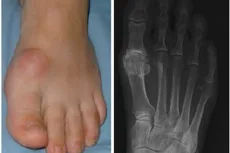
Hallux rigidus can manifest in varying degrees of severity, ranging from mild stiffness to significant limitation of movement. In its mildest form, individuals may experience occasional discomfort and stiffness in the big toe joint, particularly during activities that require bending the toe. As the condition progresses, stiffness and pain may become more pronounced, affecting daily activities such as walking, standing, and even wearing shoes. Severe cases of hallux rigidus may result in complete loss of movement in the big toe joint, leading to significant disability and impairment of quality of life.
The extent of joint damage can also vary among individuals with hallux rigidus. In some cases, the cartilage within the MTPJ may show early signs of wear and tear, with minor irregularities and roughening of the joint surfaces. In more advanced stages, the cartilage may become severely eroded, leading to the formation of bony spurs (osteophytes) and deformity of the joint. These bony spurs can cause pain and discomfort, particularly when they rub against surrounding soft tissues or press against tight-fitting shoes.
The primary cause of hallux rigidus is arthritis, which leads to the deterioration of the cartilage within the MTPJ. This can result from wear and tear over time, previous injuries to the joint, or underlying medical conditions like gout. However, in some cases, the exact cause may remain unidentified. While the exact cause of hallux rigidus may sometimes be unclear, it often develops gradually over time, particularly as people age and the joint undergoes natural degenerative changes.
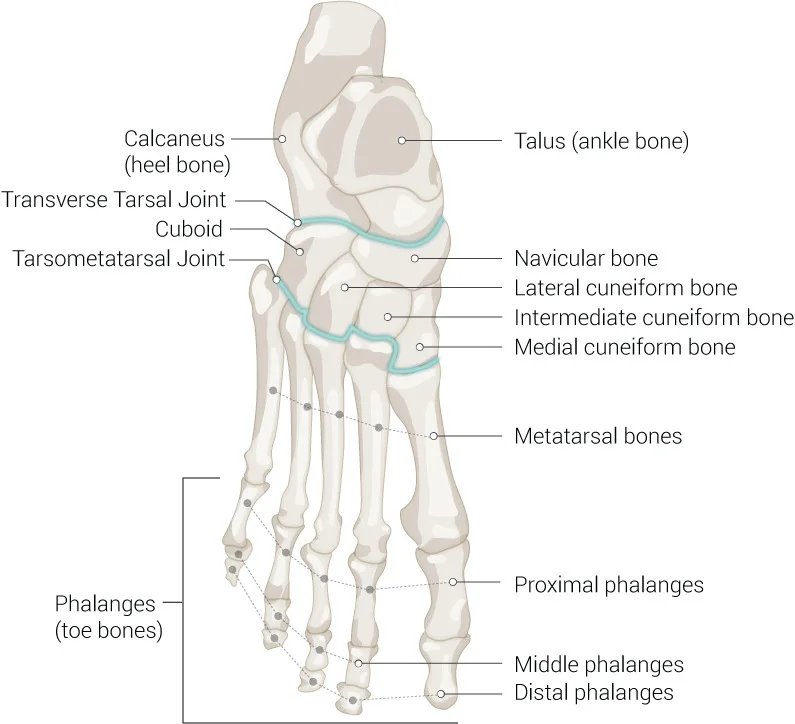
The foot’s anatomy is intricate, comprising bones, ligaments, tendons, muscles, and cartilage, all playing pivotal roles in its function.
In the context of hallux rigidus, particular attention is drawn to key structures around the great toe metatarsophalangeal joint (MTPJ). The first metatarsal bone and proximal phalanx (phalanges) interact at this joint, crucial for maintaining alignment and enabling movement.
Cartilage within the MTPJ ensures smooth movement, but in big toe arthritis, cartilage deterioration leads to inflammation and stiffness.
In its mildest form, big toe arthritis may not need operative treatment. Non-operative management focuses on relieving pain and reducing stress on the affected joint. Lifestyle modifications, weight loss, and the use of walking aids can help alleviate symptoms. Pain relief medications and appropriate footwear, including shoes with stiff insoles or a rocker bottom, may also be recommended. In some cases, cortisone injections can provide temporary relief from inflammation.
Surgical intervention may be considered if conservative measures fail to provide adequate relief.
The choice of surgery depends on factors like arthritis severity, patient age, and functional demands, requiring consultation with a skilled surgeon to determine the most suitable treatment approach.