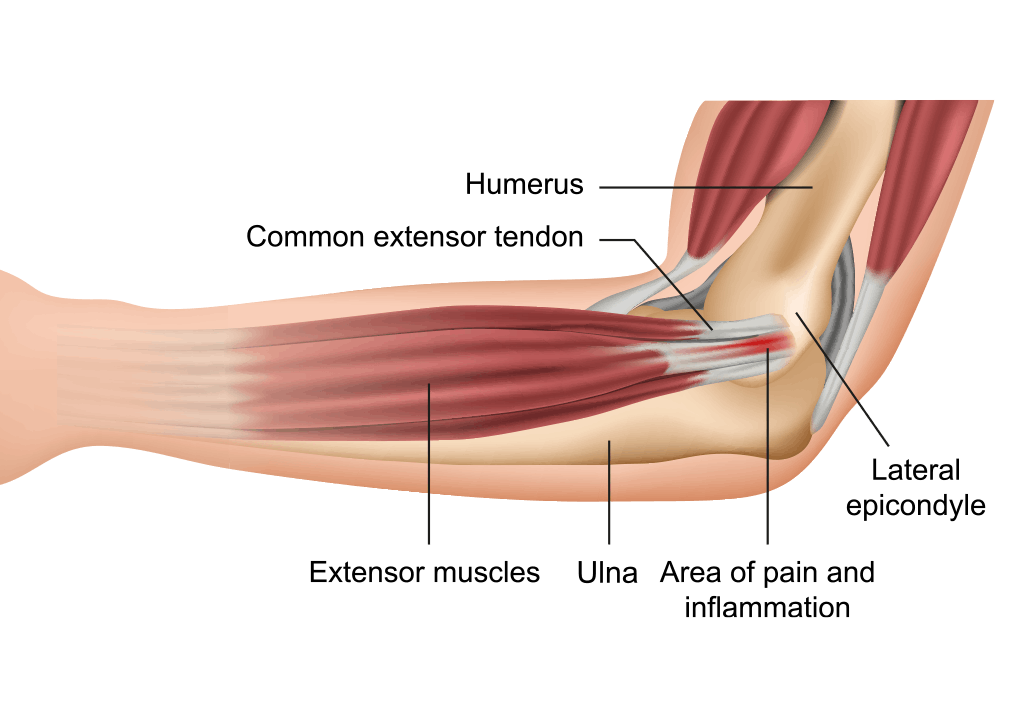
Tennis Elbow is a problem affecting the tendons attaching to the outside part of the elbow. These tendons are called the common extensor origin. The medical name is Lateral Epicondylitis and it is one of a range of conditions that fall into the category of tendinopathy.
The tendons are attached to the muscles acting to extend the wrist and straighten the fingers. Damage can be in the form of degeneration, micro-tearing or more significant tearing of these tendons leading to pain on the outside of the elbow particularly with loading activities.
Despite its name, Tennis Elbow can affect anyone, not just those who play tennis. Any repetitive movement involving extension of the hand/wrist, particularly under load can lead to the condition
Known causes can include:
Tennis Elbow most commonly affects people aged 30 to 50, but is not limited to this age range, due to the link with repetitive activity.
Quite often a single cause or starting point for Tennis Elbow isn’t easy to identify as it can begin very gradually and worsening over weeks or months.
Common symptoms are:
The elbow is made up of three bones: the humerus (upper arm), radius and ulna (two forearm bones). These bones are supported by muscles, ligaments and tendons to keep the joint in place.
The lateral epicondyle is one of several bony ‘bumps’ on the end of the humerus, where tendons attach.
A tendon is a tough cord of tissue that connects muscle to bones.
Initial solutions for Tennis Elbow include:
If there is no improvement over 6 to 12 months, surgery may be considered.
The purpose of surgery is usually to remove the damaged tendon +/- attaching healthy tendon back to bone
This procedure may be done via open surgery, where an incision is made over the elbow, or via arthroscopy, using a smaller incision and miniature instruments. The decided method will depend on individual circumstances and extent of injury.